The Wisdom We Don't Measure: Why Community Knowledge Belongs in Emergency Management
- Jul 11
- 7 min read

By M.E. Avila
Emergency management has long been defined by its ability to organize complexity. Plans establish structure before disasters occur. The Incident Command System provides a common framework for coordination. Hazard mitigation reduces future risk, logistics move resources where they are needed most, and exercises strengthen readiness before disasters occur. These systems have transformed emergency management into one of the most sophisticated multidisciplinary professions in public service.
Yet amid this evolution, one question deserves greater attention:
How does emergency management define expertise?
Traditionally, expertise has been associated with professional training, technical certifications, operational experience, and institutional authority. These qualifications are essential and remain the foundation of effective emergency management. However, disasters repeatedly demonstrate that another form of expertise exists alongside institutional knowledge: community knowledge. Unlike technical expertise, community knowledge is rarely documented in emergency operations plans or resource inventories. Instead, it is embedded within relationships, culture, geography, history, and lived experience. It develops through years, and often generations, of living in a particular place and understanding how that place responds during times of crisis. Community knowledge is not simply local perspective; it is operational knowledge.
The search for four Indigenous children who survived a 2023 plane crash in the Colombian Amazon provides a compelling example of how multiple forms of expertise can contribute to emergency response. For more than forty days, Colombian military responders coordinated one of the most complex search operations in the country's history. Aircraft searched vast areas of dense rainforest while personnel managed logistics, communications, medical support, intelligence, and operational coordination across an extraordinarily difficult environment. Alongside the military were Indigenous communities whose relationship with the Amazon had been cultivated through generations of living with the land.
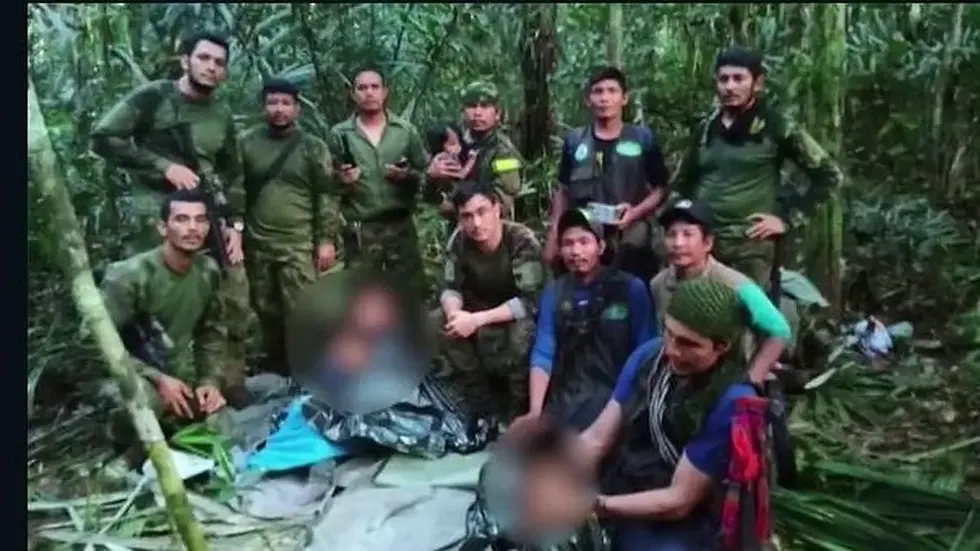
The contrast between these forms of expertise was striking. Military responders relied upon organized search operations, aviation assets, communications systems, logistics, and coordinated command structures. Indigenous communities contributed something fundamentally different. Their knowledge was rooted in place. They understood seasonal changes, animal behavior, vegetation, natural navigation, survival within the rainforest, and cultural practices developed through centuries of coexistence with the environment. Before entering the rainforest, they observed traditions that included asking permission to enter the forest and acknowledging it as something to be respected rather than conquered. Neither approach represented a better way of responding. Each represented a different way of knowing.
Understanding this distinction requires acknowledging the broader historical context surrounding Operation Hope. Long before the search began, many Indigenous communities in Colombia had experienced decades of armed conflict, displacement, and the disappearance of loved ones. Relationships between Indigenous communities and the Colombian military had been shaped by that history, creating understandable mistrust that predated the operation itself. The search therefore unfolded within a complex social landscape as much as a physical one.
One of the operation's most meaningful moments occurred when military medics were called to assist members of the Indigenous search team who had become ill. Before entering the Indigenous camp, military responders left their rifles behind. The gesture acknowledged the historical relationship between the military and Indigenous communities while demonstrating respect for the space they were entering. It did not erase decades of conflict, nor did it suddenly create trust. Instead, it communicated something equally important: respect. Operation Hope demonstrated that successful collaboration does not always require complete trust before work can begin. Sometimes collaboration begins when people recognize that others possess knowledge they do not. The children were ultimately found not because one group possessed superior expertise, but because different forms of expertise were allowed to coexist.
Operation Hope raises a question that extends far beyond the Colombian Amazon: What qualifies someone as an expert during an emergency?
Emergency management has traditionally answered that question through credentials, certifications, technical training, and operational experience. These qualifications matter. Yet disasters repeatedly reveal knowledge that cannot be obtained through formal education alone. Residents know which neighborhoods flood before flood maps are updated. Community organizations understand which families remain disconnected from formal services. Faith leaders recognize who may hesitate to seek assistance. Neighborhood volunteers often know where vulnerable residents live before response agencies arrive. None of this knowledge appears in standard operating procedures, yet all of it influences emergency outcomes. Community knowledge should therefore not be viewed as anecdotal information collected after decisions have been made. It should be recognized as operational intelligence that strengthens preparedness, response, recovery, and mitigation.
Research on Community Health Workers offers another perspective on this conversation. Through the framework of nepantla, introduced by Gloria Anzaldúa, knowledge is understood not as something belonging exclusively to one system, but as something that emerges where different worlds intersect. My doctoral research explored how Community Health Workers occupy these spaces between institutions and communities. Their role extends far beyond connecting individuals to services. They translate institutional language into community understanding, translate community realities into institutional decision-making, and navigate cultural expectations, historical experiences, and organizational systems simultaneously. Perhaps most importantly, they demonstrate that lived experience functions as a legitimate form of expertise.
This distinction has significant implications for emergency management. Preparedness increasingly depends upon individuals capable of moving between professional systems and community realities. These bridges already exist in Community Health Workers, neighborhood associations, faith leaders, Indigenous communities, volunteer organizations, and residents whose knowledge has been cultivated through generations of caring for the same places. Emergency management has often described these groups as stakeholders. Perhaps it is time to recognize them differently.
As experts.
Community Knowledge Beyond Operation Hope
Operation Hope is not an isolated example of community knowledge strengthening emergency response. History offers other examples where communities have demonstrated extraordinary capabilities long before they were formally recognized.
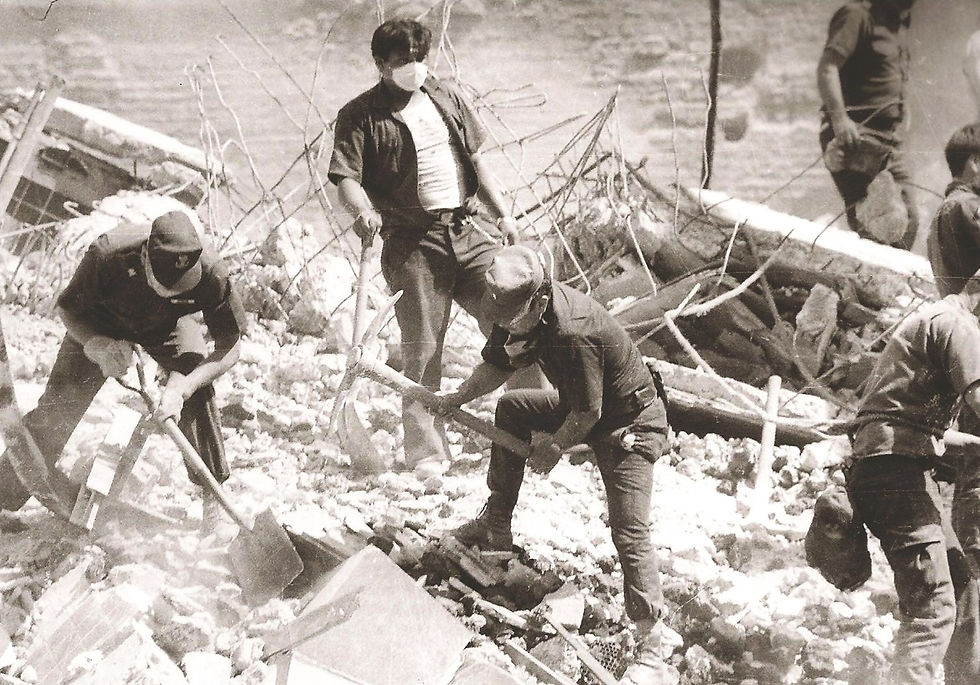
Perhaps one of the most well-known examples is Los Topos Azteca. Following the devastating 1985 Mexico City earthquake, ordinary citizens began rescuing neighbors trapped beneath collapsed buildings while official response resources struggled to keep pace with the scale of destruction. Those spontaneous volunteers eventually evolved into one of the world's most respected search and rescue organizations. Over the decades, Los Topos have responded to earthquakes, hurricanes, and other disasters across the globe, often working alongside firefighters, military personnel, emergency managers, and international search and rescue teams.
The significance of Los Topos extends beyond their technical expertise.
Their story illustrates that communities are not simply recipients of emergency assistance. They are capable of developing extraordinary capabilities of their own.
What began as neighbors helping neighbors evolved into an internationally respected organization without losing its community roots. Their success demonstrates that community knowledge and professional expertise are not opposing concepts. They reinforce one another.
Operation Hope and Los Topos Azteca illustrate two different expressions of the same principle. In Colombia, generations of place-based knowledge complemented military search operations. In Mexico, community action evolved into internationally recognized technical expertise. Both examples challenge the assumption that expertise originates only within formal institutions.
From Stakeholders to Knowledge Partners
Emergency management has made significant progress through initiatives such as Whole Community planning, recognizing that preparedness and resilience depend upon broad collaboration across sectors. Yet collaboration often remains centered on participation rather than knowledge.
Communities are frequently invited to planning meetings, listening sessions, or public comment periods after priorities have already been established. Their participation is encouraged, but their expertise is not always recognized.
There is an important distinction between engagement and partnership.
Engagement asks communities to contribute to institutional processes.
Partnership recognizes that communities possess knowledge capable of shaping those processes from the very beginning.
This distinction matters because knowledge influences decision-making.
When emergency managers recognize community members as knowledge partners rather than stakeholders alone, planning changes. Hazard mitigation becomes more responsive to lived realities. Risk communication becomes more culturally relevant. Preparedness initiatives become more accessible. Recovery efforts become more equitable because they reflect the experiences of those most directly affected.
Community knowledge should not be viewed as supplemental information gathered after plans are written. It should inform how those plans are developed in the first place.
Expanding the Definition of Expertise
The future of emergency management will undoubtedly require increasingly sophisticated technology. Artificial intelligence, predictive analytics, remote sensing, geographic information systems, and advanced communications will continue transforming the profession. Technology will remain essential. So will professional training. Neither should be diminished.
However, technological advancement does not eliminate the need for community knowledge. In many cases, it makes that knowledge even more valuable. Data may identify where flooding is likely to occur. Residents can explain how those floods affect daily life. Hazard models can estimate exposure. Communities can identify who is most likely to be overlooked during response. Geographic information systems map infrastructure. Community members understand the relationships that make neighborhoods function.
Neither form of expertise replaces the other. Together, they produce a more complete understanding of risk. Emergency management has always emphasized building capabilities. Community knowledge should be recognized as one of those capabilities. Not because communities know everything. Not because institutions know too little. But because complex problems require multiple ways of understanding them.
Implications for Leadership
Recognizing community knowledge as expertise also changes what leadership looks like. Leadership becomes less about possessing all the answers and more about creating environments where different forms of expertise can inform one another. It requires curiosity alongside technical competence and humility alongside authority. Leaders must become skilled at asking not only what information is available, but whose knowledge has yet to be considered.
This shift does not diminish professional expertise. It strengthens it. Professional expertise provides coordination, accountability, operational discipline, and technical precision. Community expertise provides context, relationships, cultural understanding, and lived experience. Emergency management is strongest when both are viewed as complementary rather than competing.
Perhaps one of the profession's greatest opportunities is not developing another planning framework, but expanding its understanding of who qualifies as an expert.
Looking Forward
As disasters become more frequent and increasingly complex, emergency management will continue adapting to new threats. Climate change, urbanization, technological disruption, and evolving public health challenges demand innovative thinking.
Innovation, however, is not limited to technology. Sometimes innovation begins by recognizing knowledge that has always existed. Communities have never been empty vessels waiting for expertise to arrive. They have always possessed knowledge, relationships, traditions, and adaptive capacities that contribute to resilience. The challenge is not creating community expertise. The challenge is recognizing it.
Operation Hope, the work of Los Topos Azteca, and research on Community Health Workers all point toward the same conclusion. They demonstrate that effective emergency management depends not only on coordinating resources, but also on coordinating knowledge. Technical systems and community wisdom are not competing models of emergency management. Together they provide a more complete understanding of risk, response, and recovery.
The profession has long measured readiness through plans, equipment, personnel, and capabilities. Those measures remain essential. Yet perhaps the next evolution of emergency management is learning to recognize another capability that has too often gone unmeasured. Community knowledge. Not as an alternative to professional expertise. Not as a courtesy extended through public participation. But as a legitimate form of expertise that belongs alongside institutional knowledge, informing decisions before disasters occur, strengthening collaboration during response, and supporting recovery long after the immediate crisis has passed.
Emergency management has always been about bringing people together to solve complex problems. The next step may simply be recognizing that expertise has never belonged to one system alone. It has always existed in the space where professional knowledge and community knowledge meet. It is in that space, where different experiences, perspectives, and ways of knowing converge, that the strongest, most resilient communities are built.

Comments